
The heat-free house: How Swisscom cools a building for 2 000 people using 20 times less energy
A huge business park, directly between concrete buildings, railway and motorway, exposed to the sun. And yet never over 25 degrees. This is made possible by a visionary indoor climate concept – which requires 20 times less energy than conventional air conditioning systems.
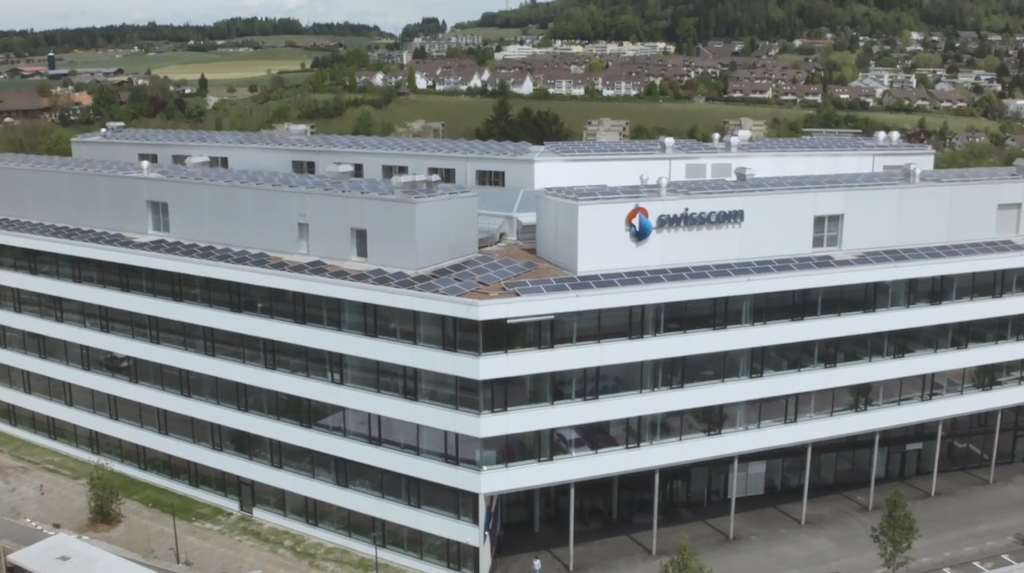
Outside 34, inside just over 24 degrees. This is the weather situation in Ittigen near Bern these days. This Swisscom office building has a very pleasant indoor climate all year round – not thanks to energy-guzzling air conditioning systems, but because of a cooling principle that requires over 20 times less energy. The concept was so ground-breaking at the time that a great deal of persuasion was required at all levels.
A fresh office based on the principle of a damp rag
The man behind it is Martin Meier. The engineer from Nänikon on the always refreshing Greifensee developed the indoor climate and energy concept for the energy-saving new building together with Beat Kegel.
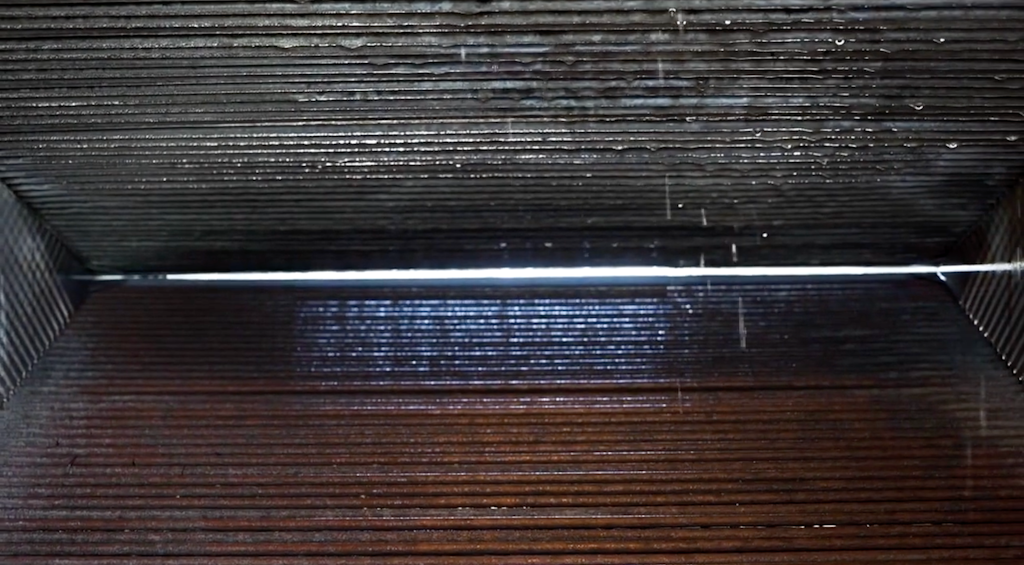
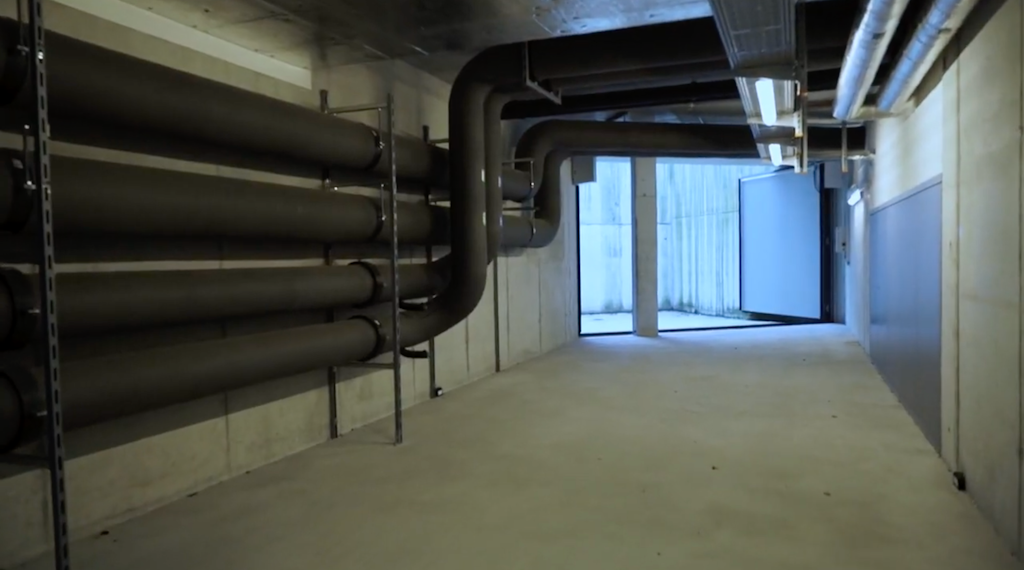
The cooling of the building in Ittigen begins on the roof with these tubes. Not so easy to see in the picture: They are sprayed with water. The water on the tube surfaces evaporates, which cools the circulation water inside the tubes.
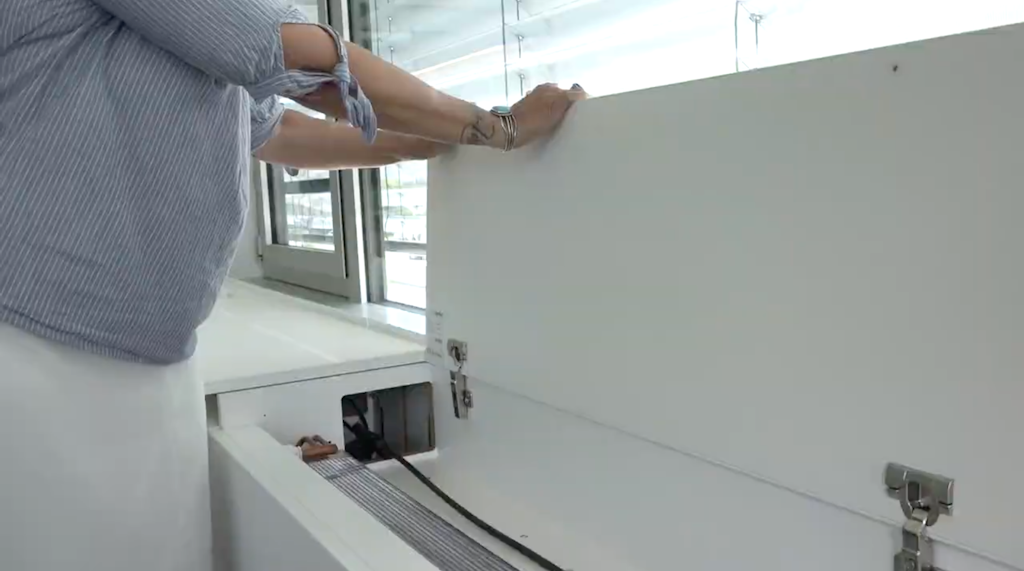
From there, the water is distributed to the parapets in the building, where it cools the air in the offices gently but very effectively using small, inaudible fans. This is comparable to the principle of radiators in heating systems – where hot water is used.
But this is not the only ingenious innovation in the business park's indoor climate. New ground has also been broken in the area of air supply.
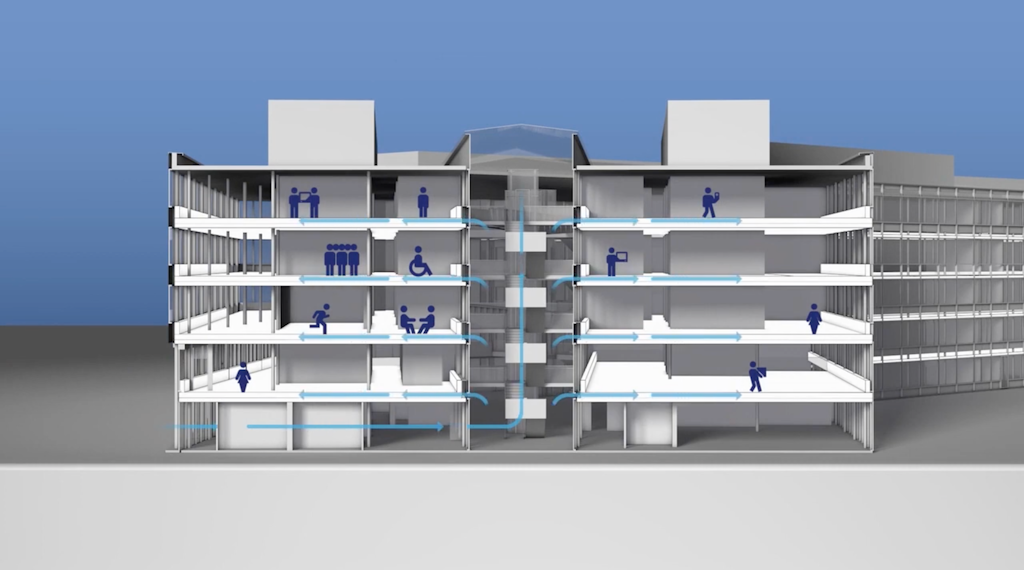
This principle is called “lungs”: fresh air flows into the building from the basement, which is drawn in from a green area behind the building. This air rises through the building's natural thermals and is distributed across the deliberately open-plan floors. Within the storeys, so-called “compound ventilators” ensure uniformly good air quality, even in the meeting rooms and focus rooms.
This innovation was made possible because Swisscom focussed on the most sustainable construction principle possible from the outset when building the business park in Ittigen. It paid off and proved its worth – the project, which was awarded the “Watt d'Or”, has now been in use for over 10 years without any problems.
During this time, the building has also received visits from all over the world: engineers came to take a look at the principle. There are very few comparable projects that are so holistically optimised and consistently implemented.
Why? Martin Meier is somewhat disillusioned. “It was a frontrunner and is still one of the most sustainable buildings in the world today. But the principle is new and the construction industry is obviously finding it very difficult to really rethink.” In his many contacts, he has found that the will is definitely there - but that at the crucial moment, it often reverts back to solutions that have been practised for a long time. “Of course, this is also due to risk considerations. Many people are afraid that it won't work after all – the familiar systems aren't really satisfactory, but you know them and can judge them better. It would therefore be important for these new approaches to be taught and learnt at universities and vocational colleges, but unfortunately this is still not the case. In the meantime, however, there are fortunately an increasing number of building owners and investors who recognise the clear advantages of these systems and implement them consistently. There is a lot to do.”
More sustainable cooling – also thanks to solar systems
However, traditional air conditioning systems could also be operated more sustainably, and Swisscom is leading the way here too. On the one hand, data centres, buildings and other systems are cooled with fresh air whenever possible – on the other hand, solar systems are also used to generate energy. And these work perfectly with cooling systems: Because especially in summer, especially on hot days, a lot, sometimes even too much solar power is generated.
If this is used specifically for cooling when the sun is shining, it can save energy during the night when there is no surplus solar power available. Jöri Engel, CEO of Swisscom Ltd, is therefore concerned with targeted and controlled consumption. In contrast to water, where it makes sense to reduce consumption at any time of day, electricity behaves differently: sometimes there is almost too much, sometimes too little.
This is also noticeable in Ittigen, where there is also a solar installation. In one year, it provides as much electricity as a small village needs. Far too much for the economical air conditioning system – so that the entire building, including the integrated restaurant, can be supplied with it. And on sunny summer days, it even supplies energy to the neighbouring houses.
Swisscom at EEC
Swisscom has been involved with EEC since 2013. More information on Swisscom's energy and climate goals and measures can be found in the participant profile.