
SBB
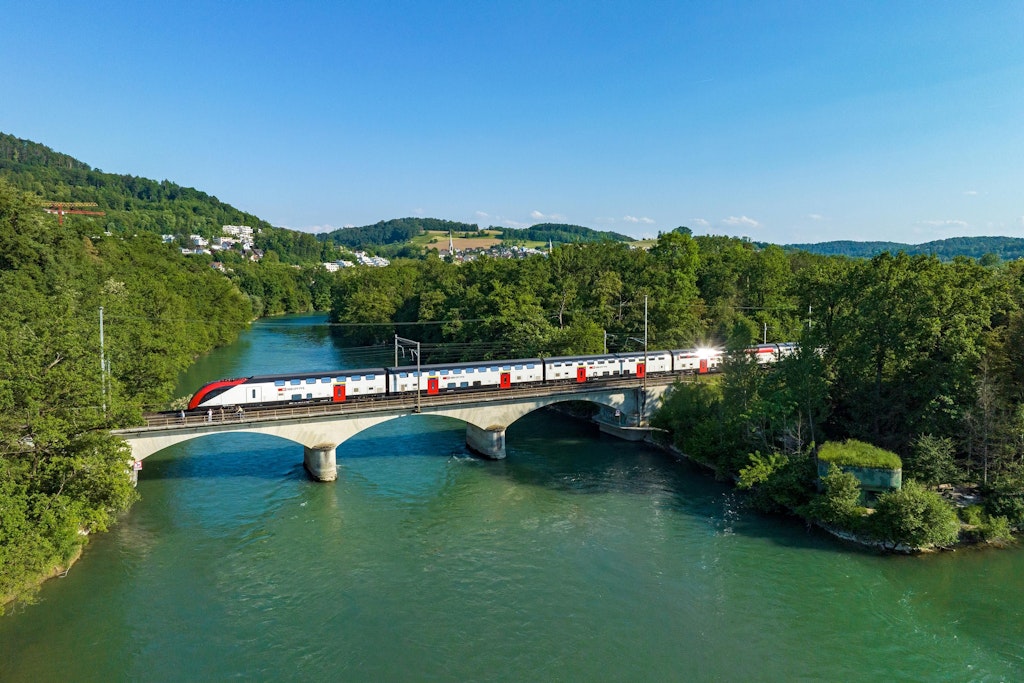
With around 35 500 employees, SBB transports people and goods, providing access to and connecting the country’s centres and regions. For 18 per cent of passenger transport and 38 per cent of freight transport, railways consume only 5 per cent of the energy used by land transport in Switzerland and cause only 0.3 per cent of CO2e emissions.
Energy and climate
SBB aims to reduce its greenhouse gas emissions by 60 per cent by 2030. Its comprehensive programme for achieving this includes cutting energy use, using renewable energy and replacing climate-damaging industrial gases, for example in air-conditioning systems. Since 1 January 2025, SBB trains have been running on traction current from 100 per cent renewable energy. In 2024, SBB increased its energy efficiency by 7.9 per cent compared to 2018/2019, saving 600 gigawatt hours of energy, equivalent to the electricity demand of over 150 000 households. In order to underline its commitment, in 2022 it joined the Science Based Targets initiative (SBTi).
Targets
Under the EEC initiative, SBB has pledged to meet the following targets:
1. Increasing energy efficiency
Benchmark: 2018/2019
- Target for 2026: +6%
- Target for 2030: +10%
2. Switching to renewable energies
Thermal energy and fuels
- Target for 2026: 32% renewables
- Target for 2030: 50% renewables
Electricity
- Target for 2026: 100% from renewable sources – this target has already been achieved as of 1st January 2025
3. Producing green power
Photovoltaics
- Production in 2021: 2.3GWh
- Target for 2026: +17.7GWh
- Target for 2030: +10GWh
Measures
Like all the participants, SBB has undertaken to implement the joint measures. In addition, SBB is also implementing the following individual measures:
1. FLIRT rolling stock energy-saving package
2026: -6,700MWh/year
2. More efficient production at Ritom hydroelectric power station
2026: 1,300MWh/year electricity production
3. Modernisation of IC2000 cars
2025: -12,500MWh/year
4. Optimisation of railway access and track area lighting
2025: -10,100MWh/year
5. Use of up to 25% HVO biodiesel (synthetic diesel made from hydrogenated vegetable oils)
2025: up to -5,100t CO2/year
6. Energy-optimised stabling of RV-Dosto regional double-decker trains
2026: -4,500MWh/year
7. Refurbishment of Am843 shunting locomotives
2029: -8,800t CO2/year
8. Modernisation of ICN cars
2027: -2,300MWh/year
9. Use of natural coolants
2030: -500t CO2/year
10. Conversion of gas point-heating systems to renewable solutions
2030: -2,600t CO2/year
11. Replacement transformers for traction power supply
2030: -15,600MWh/year
Further information
Up-to-date information on the implementation status of this participant’s targets and measures is published in our Energy and Climate Report. SBB also provides information on its own website about its commitments in the area of energy and climate.